
Maslinova ulja
-
-20%
 Ekstra djev. maslinovo ulje Gold Premium Selection100% ?isto ekstra djevi?ansko maslinovo ulje od sirovih plodova masline, porijeklo Hrvatska Posebna cijena 15,99 EUR Normalna cijena 19,99 EUR
 -
 Ekstra djevi?ansko maslinovo ulje100% ?isto ekstra djevi?ansko maslinovo ulje od sirovih plodova masline, porijeklo Gr?ka Normalna cijena 12,39 EUR Već od 11,40 EUR
 -
 Ekstra djev. maslinovo ulje 750 ml100% ?isto ekstra djevi?ansko maslinovo ulje od sirovih plodova masline, porijeklo Gr?ka Normalna cijena 15,47 EUR Već od 14,23 EUR
 -
 Ekstra djev. maslinovo ulje BIO* 500 ml100% ?isto ekstra djevi?ansko maslinovo ulje od sirovih plodova masline, porijeklo Gr?ka Normalna cijena 11,24 EUR Već od 10,34 EUR
 -
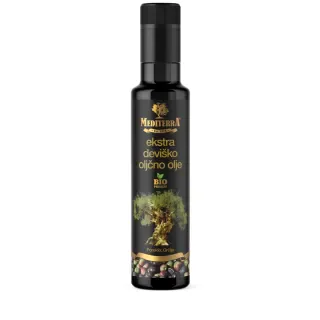 Ekstra djev. maslinovo ulje BIO*100% ?isto ekstra djevi?ansko maslinovo ulje od sirovih plodova masline, porijeklo Gr?ka Normalna cijena 6,79 EUR Već od 6,25 EUR
Extra Virgin Olive Oils – A Natural Choice for Supporting Health
In our online healthy food store, we offer a wide selection of high-quality extra virgin olive oils for various culinary delights and health support. Extra virgin olive oils are a natural source of antioxidants and healthy fats that contribute to a balanced diet and are indispensable in cooking and seasoning dishes. But beware! The highest quality oils are the extra virgin olive oils.
Benefits of Using Extra Virgin Olive Oils
Olive oils are popular due to their numerous health and wellness benefits. Regular use of high-quality extra virgin olive oil contributes to better digestion, lower blood pressure, and support for the cardiovascular system. They are also rich in vitamin E and provide natural protection for cells against oxidative stress.
Choose the Olive Oil That Suits Your Taste
We offer various extra virgin olive oils under our own brands to suit different tastes and preferences. Our selection includes extra virgin olive oils from different olive varieties and origins. Our classic range includes extra virgin olive oils from the Koroneiki variety, which is medium spicy and of exceptionally high quality. For the most demanding gourmets and connoisseurs, we offer the GOLD SELECTION series from Croatia (Oblica variety) and the PLATINUM SELECTION series from Bosnia and Herzegovina (mountainous region of Herzegovina, 200 m above sea level, just a few km from the Dalmatian coast), featuring the Oblica, Istrian Belica, and Leccino olive varieties.
How to Use Extra Virgin Olive Oil in the Kitchen?
Olive oils are an excellent addition to salads, pasta, meat dishes, and vegetable sides. It is recommended to use them in cold dishes or as a topping after cooking to preserve their rich nutritional value and aroma. Olive oils can also be used as a base for sauces or as a tasty dip for bread.
Why Choose Our Olive Oils?
In our healthy food online store, we are committed to quality. Our olive oils come from trusted farmers who follow natural farming methods. Each olive oil is produced with sustainability in mind, so you receive a natural product of the highest quality on your table.
How Do We Classify Olive Oils by Quality?
Virgin Olive Oil: "Virgin olive oil" refers to oils obtained from the fruit of the olive tree solely by mechanical or other physical means under conditions that do not lead to oil alterations, and that have not undergone any treatment other than washing, decanting, centrifuging, or filtering, excluding oils obtained using solvents or with chemical/biochemical action or by re-esterification processes or mixing with other types of oil.
Virgin olive oils are classified and described exclusively as follows:
Extra Virgin Olive Oil: "Extra virgin olive oil" means virgin olive oil with a free acidity, expressed as oleic acid, of not more than 0.8 g per 100 g and with other characteristics in accordance with those laid down for this category by the Commission under Article 75(2).
Virgin Olive Oil: "Virgin olive oil" means virgin olive oil with a free acidity, expressed as oleic acid, of not more than 2 g per 100 g and with other characteristics in accordance with those laid down for this category by the Commission under Article 75(2).
Lampante Olive Oil: "Lampante olive oil" means virgin olive oil with a free acidity, expressed as oleic acid, of more than 2 g per 100 g and/or with characteristics in accordance with those laid down for this category by the Commission under Article 75(2). Note: Although categorized under virgin olive oils, lampante olive oil is of lower quality with acidity over 2%, lacking fruitiness, and having significant sensory defects. It is not intended for retail sale and is used for further processing (refining) or industrial purposes.
Refined Olive Oil: "Refined olive oil" means olive oil obtained by refining virgin olive oil, with a free acidity, expressed as oleic acid, of not more than 0.3 g per 100 g and with other characteristics in accordance with those laid down for this category by the Commission under Article 75(2).
Olive Oil – Blend of Refined and Virgin Olive Oils: "Olive oil composed of refined olive oil and virgin olive oils" means oil obtained by blending refined olive oil and virgin olive oils other than lampante olive oil, with a free acidity, expressed as oleic acid, of not more than 1 g per 100 g and with other characteristics in accordance with those laid down for this category by the Commission under Article 75(2).
Crude Olive Pomace Oil: "Crude olive pomace oil" means oil obtained from olive pomace by treatment with solvents or physical means.
Refined Olive Pomace Oil: "Refined olive pomace oil" means oil obtained by refining crude olive pomace oil, with a free acidity, expressed as oleic acid, of not more than 0.3 g per 100 g.
Olive Pomace Oil: "Olive pomace oil" means oil obtained by blending refined olive pomace oil and virgin olive oils other than lampante olive oil, with a free acidity, expressed as oleic acid, of not more than 1 g per 100 g.
Olive Oil or Olivno Oil – Which is Correct?
Many still ask: "Olivno or oljčno oil?", "Why are the fruits olives, but the oil is oljčno?", "Is oljka just the tree and oliva the fruit? Which is linguistically correct in Slovene?"
Both are correct. The Dictionary of the Slovene Literary Language (SSKJ) accepts both terms equally: the fruit can be called oljka or oliva, and even the tree can be oliva, although oljka is more common. The oil can also be referred to as oljčno or olivno oil. At Mediterra, we advocate for the term "oljčno olje" which has evolved historically in Slovene usage.
History of Olives
The olive first appeared thousands of years ago in the Mediterranean basin and spread to surrounding countries. It is believed that the harvesting of edible and wild olives in the Aegean area dates back to the Neolithic period. These wild olives are referred to as Olea Europaea Oleaster. The oldest pollen samples date from the end of the Neolithic and originate from Crete and Boeotia.
50,000-year-old fossilized leaves of European olive trees were discovered on the islands of Nisyros, Cyme, and Santorini.
The ancient Greeks worshipped the olive tree and considered it of divine origin. A well-known myth describes the competition between Poseidon and Athena for naming the city of Athens. According to mythology, Poseidon struck a rock with his trident, creating a salt spring. Athena struck the same rock with her spear and caused an olive tree full of fruit to grow. This tree, known as "Moria Elea," was believed to be the first olive tree in Athens and the world, symbolizing glory and prosperity.
Homer called olive oil "liquid gold." In Ancient Greece, the olive held an important place in both diet and economy. Sophocles called it the "nurturer of children." It was a symbol of peace, and those offering an olive branch were welcomed with respect. Winners of the Panathenaic games were awarded amphorae filled with premium oil – up to 2.5 tons for running champions and about 5 tons for chariot race winners. Athletes often sold the oil and amphorae abroad for high prices.
Olive oil was also used as a base in cosmetics and perfumery and as fuel for lamps – a tradition still preserved today in religious candles.
Ancient authors described various types of edible olives. "Kolymbades" and "almades" were brine-cured, "Thlastai elaiai" were cracked olives, "gongylai" were large round olives, and "drypeteis" were overripe and wrinkled. "Pityrides" were small, oat-colored olives. "Stemfilide" were black olives ground into a paste called "stemphylon," seasoned into a spread known as "epityron," similar to modern tapenade.
Some ancient Greek olive processing methods are still used today. Olives were soaked in brine to reduce bitterness, soaked in vinegar, and stored in olive oil. One gourmet recipe recommended preserving olives in spiced, boiled wine vinegar with coriander, cumin, fennel, and mint.
Crete – Island of Zeus and Home of Olive Cultivation
Since antiquity, Crete has been a jewel of the Mediterranean and a haven of natural food production. French explorer Paul Faure believed that olive cultivation began on this majestic island. Traditional Cretan cuisine is now considered one of the healthiest diets. Greece has the highest per capita olive oil consumption at 12 kg per person annually – and Crete tops even that with 31 kg per person per year!
What is Traditional Cretan Cuisine?
Simply put, it is eating only what Mother Nature provides – no industrial processing or artificial additives. Daily staples include fresh vegetables, fruits, herbs, whole grains, dried fruits, nuts, seeds, and occasionally goat/sheep cheese, yogurt, honey, fish, and meat.
Crete is vast, green, and mountainous – about 30% of its land is cultivated. The interplay between wild and cultivated vegetation makes it unique and unforgettable.